

Here are the most important things to remember when looking for a truck mattress. Keep these points in mind to make sure you get the best sleep possible on the road.
Key Takeaways
- Always measure your sleeper cab’s length, width, and height before buying a mattress.
- Common semi-truck mattress sizes include 42″x80″, 38″x80″, and 36″x76″, but yours might be different.
- Consider your sleeping style and the need for durability for long trips when choosing materials.
- Don’t guess your measurements; use a tape measure and double-check everything.
- Ensure any mattress you buy meets safety standards, especially fire resistance (FMVSS 302).
Understanding Truck Mattress Dimensions
Why Mattress Fit Matters in a Sleeper Cab
Getting the right mattress size for your truck’s sleeper cab isn’t just about making it look good; it’s about actually getting some decent rest. A mattress that’s too big will cramp your style, literally. You’ll be bumping into walls, struggling to move around, and generally feeling pretty miserable. On the flip side, a mattress that’s too small leaves awkward gaps, which can be annoying and might even cause you to roll off if you’re a restless sleeper. The goal is a snug fit that maximizes your usable space and comfort. Think about it – you spend a lot of time in that cab, and a well-fitting mattress can make a huge difference in your daily grind. It’s one of those things that seems minor until it’s wrong, and then it’s all you can think about.
Common Truck Mattress Sizes
Unlike your bedroom at home, truck sleeper cabs don’t always follow a strict set of dimensions. You won’t find a standard
Accurate Measurement Techniques for Your Truck Bed
Alright, let’s talk about getting the measurements right for your truck’s sleeper cab. This is probably the most important part of the whole process, because honestly, guessing here is just asking for trouble. You want a mattress that fits like a glove, not something that’s going to slide around or leave awkward gaps. Getting precise measurements is the first step to a better night’s sleep on the road.
Gathering Essential Measuring Tools
Before you even think about measuring, make sure you’ve got the right gear. You don’t need anything fancy, just the basics.
- A good tape measure: Metal ones are usually best, they stay straight and don’t stretch. Make sure it’s at least 10 feet long, maybe longer if your cab is huge.
- A notepad and pen/pencil: You’ll want to jot down your numbers as you go. Don’t trust your memory, especially after a long day.
- A friend (optional but helpful): Having an extra set of hands can make measuring the length and width a lot easier, especially if you need to hold the tape taut.
Step-by-Step Measurement Process
Once you’ve got your tools, it’s time to get down to business. Clear out any bedding or old mattress first so you have a clean space to work with.
- Measure the Length: Start at the very head of where your mattress will go (where your head rests) and run the tape measure all the way to the foot. Make sure the tape is straight and not sagging. Write this number down in inches. Most semi-truck sleepers are somewhere between 75" and 80" long, but always measure your specific space. You can find general truck bed dimensions online, but your truck might be a bit different.
- Measure the Width: Now, go from one side of the sleeping area to the other at its widest point. Again, keep that tape measure straight. Common widths can be around 32", 36", or 42", but yours could vary. Record this measurement.
- Measure the Height (Thickness): This one is often overlooked. Measure from the base of where the mattress sits up to the ceiling or any overhead cabinets. This tells you the maximum thickness your new mattress can be without causing issues. Most cabs can handle a mattress between 6" and 10" thick.
Accounting for Unique Cab Features
Truck cabs aren’t always perfect rectangles, so you need to be observant.
- Corners: Are they square, or are they rounded? If they’re rounded, you’ll want to measure the radius or note the curve. Some people even use cardboard to trace the exact shape of the corners to get a template.
- Obstructions: Look for anything sticking out – like wheel wells, storage compartments, or even the shape of the cab walls themselves. Make a note of these areas and their dimensions. You might need to account for these by choosing a slightly smaller mattress or a custom shape.
- Uneven Surfaces: Sometimes the base where the mattress sits isn’t perfectly flat. Note any slopes or dips.
Always double-check your measurements. It’s easy to make a small error, and that small error can mean a mattress that doesn’t quite fit right. Measure twice, order once, as they say. This attention to detail is what separates a good fit from a frustrating one, and it’s key to finding the right sleeper cab mattress for your needs.
Choosing the Right Truck Mattress for Your Needs
So, you’ve got the measurements down pat. That’s a huge step! Now comes the fun part: picking a mattress that actually feels good to sleep on. It’s not just about fitting the space; it’s about getting decent rest so you can do your job safely and effectively. Think about it – you spend a lot of time in that cab, and a bad mattress can really mess with your back and your mood.
Considering Your Sleeping Style
Everyone sleeps differently, right? Some folks are total starfish sleepers, others are curled up like a cat. Your preferred position really matters when picking out a mattress. If you’re a side sleeper, you’ll probably want something a bit softer, maybe with some give, so your hips and shoulders don’t feel all squished. Back sleepers usually do better with something a bit firmer to keep their spine in a neutral position. Stomach sleepers? You’ll want to avoid sinking in too much, so a medium-firm to firm option is usually the way to go. It’s all about keeping that spine aligned.
- Side Sleepers: Look for medium-soft to medium firmness. You want enough cushioning to let your pressure points sink in a bit.
- Back Sleepers: Medium-firm is often ideal. It supports your natural curve without letting you sag.
- Stomach Sleepers: Medium-firm to firm is best to prevent your hips from dropping too low.
Prioritizing Durability for Long Hauls
If you’re out on the road for weeks at a time, your mattress is going to get a workout. You need something that’s built to last. Cheaper materials might feel okay at first, but they can start to sag or break down pretty quickly under constant use. Look for mattresses made with high-density foams or sturdy innerspring systems. A good warranty is also a sign that the manufacturer stands behind their product’s durability. You don’t want to be replacing your mattress every few months.
Durability isn’t just about how long the mattress lasts; it’s also about how well it holds up to the vibrations and movement inherent in truck travel. A well-constructed mattress will maintain its support and comfort over thousands of miles.
Balancing Budget and Comfort
Let’s be real, cost is always a factor. Truck mattresses can range quite a bit in price. You can find basic foam options for a few hundred bucks, while more advanced hybrid or memory foam models can climb higher. The trick is to find that sweet spot where you’re not breaking the bank but still getting a mattress that provides good support and comfort. Sometimes, spending a little more upfront can save you money and discomfort in the long run. Don’t just go for the cheapest option if it means sacrificing sleep quality. Remember, you can often find good deals on truck mattresses if you shop around.
Navigating Truck Mattress Size Variations
Alright, let’s talk about truck mattress sizes. It’s not as simple as just grabbing a twin or queen off the shelf, not by a long shot. The world of truck mattresses has its own set of rules and dimensions, and knowing them can save you a lot of headaches. Understanding these variations is key to getting a mattress that actually fits your sleeper cab.
Standard Semi-Truck Mattress Dimensions
Most semi-trucks have sleeper cabs that are designed for specific mattress sizes. While there’s some wiggle room, manufacturers tend to stick to a few common dimensions. You’ll often see sizes that are similar to a twin XL, but with slight differences. For example, a very common size is 42 inches wide by 80 inches long. But don’t just assume; other standard sizes you might encounter include:
- 32" x 80"
- 36" x 80"
- 39" x 80"
- 42" x 80"
- 44" x 80"
It’s important to remember that these are just common standards. Your specific truck model might have slightly different requirements. Always double-check your measurements against these common sizes, but never rely on them solely. You can find more details on standard semi-truck mattress dimensions if you need them.
Mattress Sizes for Truck Campers
Truck campers are a whole different ballgame. These setups can vary wildly in size and shape depending on the make and model. Some might fit a standard twin mattress, while others require something much more specific. You might be looking at:
- Short Queen: Often around 60" x 75"
- 3/4 Full: Typically about 48" x 75"
- Custom Shapes: Many truck campers have built-in nooks or angled walls that mean a standard rectangular mattress just won’t cut it.
If you’re outfitting a truck camper, measuring is even more critical. You might even need to think about custom-made covers for your cushions if you’re going that route, similar to how you’d protect patio cushions with custom covers.
When to Consider Custom Truck Mattresses
So, when does it make sense to go the custom route? Honestly, if your measurements don’t line up with any of the standard sizes, or if your sleeper cab has some unusual angles or cutouts, a custom mattress is probably your best bet. Trying to force a standard mattress into a non-standard space is a recipe for discomfort and a mattress that wears out faster. It’s better to get something made to fit perfectly.
Sometimes, the space you have isn’t just about length and width. You also need to think about the height. A mattress that’s too thick can make your cab feel cramped, leading to bumped heads and a generally uncomfortable sleeping environment. Always measure the available vertical space too.
Key Factors in Truck Mattress Selection
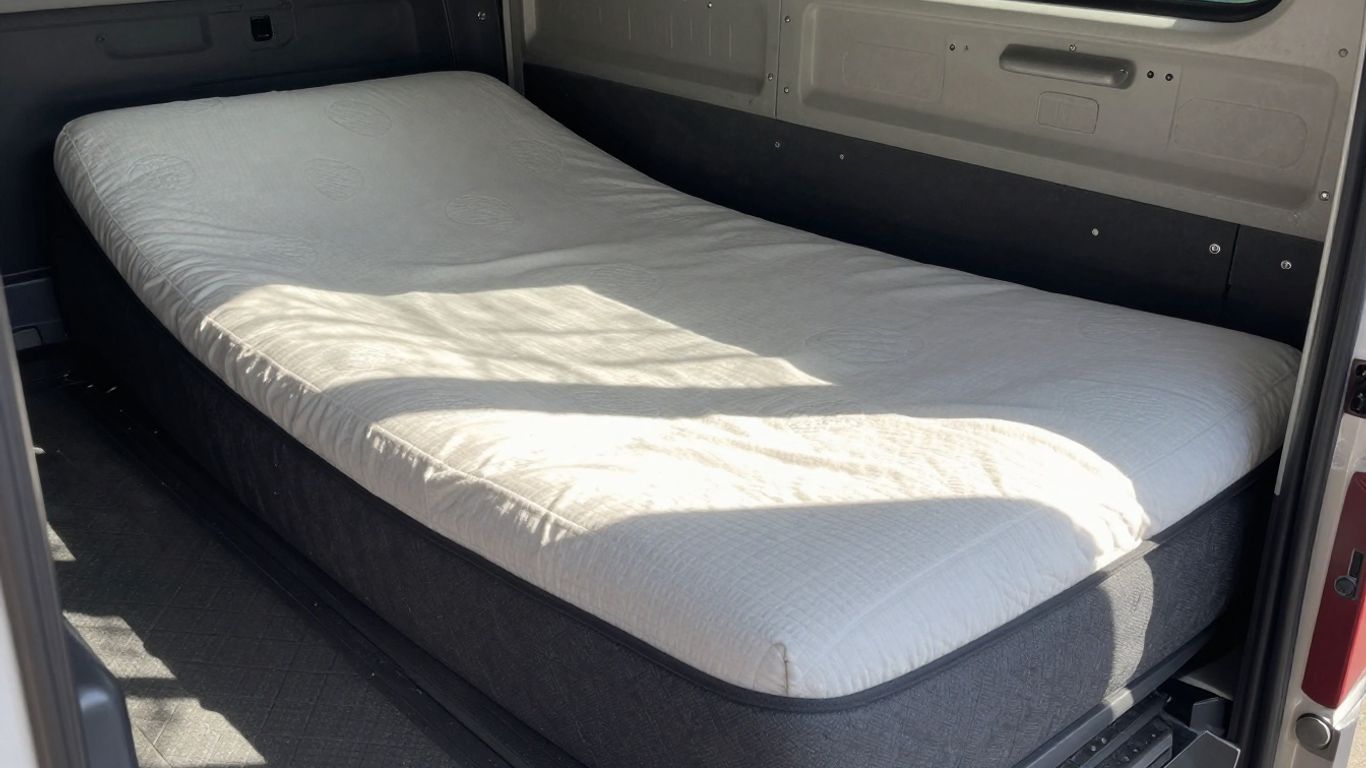
Alright, so you’ve got your measurements all sorted out, which is a huge step. But before you click ‘buy’ on that mattress, let’s talk about a few more things that really matter. It’s not just about fitting the space; it’s about what’s inside the mattress and how it’s going to hold up.
Material and Support Options
This is where the rubber meets the road, so to speak. The stuff your mattress is made of directly impacts how you sleep and how long it lasts. You’ve got a few main players:
- Foam: Memory foam and high-density foam are popular. They contour to your body, which can be great for pressure relief, especially if you toss and turn a lot. Some folks find foam a bit too warm, though.
- Innerspring: These are like traditional mattresses with coils. They offer good bounce and airflow, which can help keep you cooler. The quality of the coils and the padding on top makes a big difference here.
- Hybrid: This is the best of both worlds, usually combining coils with foam layers. You get the support of springs and the comfort of foam. They tend to be a bit pricier but often worth it.
The right support is key, especially if you deal with back pain from long hours in the driver’s seat. A mattress that’s too soft won’t keep your spine aligned, and one that’s too firm can create pressure points.
Breathability and Cooling Features
Nobody likes waking up in a sweat puddle. Truck cabs can get pretty warm, especially when the engine’s off and you’re trying to sleep. Look for mattresses that are designed with airflow in mind. This might mean:
- Open-cell foam structures that let air move through.
- Gel-infused foam, which is supposed to help dissipate heat.
- Innerspring systems that naturally allow for more ventilation.
- Breathable cover materials.
It might seem like a small thing, but a cooler sleep can make a world of difference on a long haul. You want to feel refreshed, not sticky.
Safety Standards and Compliance
This is non-negotiable. Your mattress needs to be safe. The big one to watch out for is fire safety. The Department of Transportation (DOT) has rules about this for truck mattresses, specifically Federal Motor Vehicle Safety Standard No. 302 (FMVSS 302). Basically, the material shouldn’t burn too fast. You don’t want anything that could be a hazard in an emergency. Also, be wary of covers that might use fiberglass for fire resistance, as that can be a health risk if it gets out. Stick with reputable companies that clearly state they meet these safety standards. It’s about peace of mind, knowing your sleeping surface is built responsibly. When you’re looking at bedding, make sure it fits well and stays put, so you’re not constantly adjusting it during your rest [84b0].
Choosing the right mattress involves more than just picking a size. You’re investing in your rest, your health, and your ability to do your job safely and effectively. Don’t cut corners on materials, support, or safety features. Think of it as part of your truck’s essential equipment, like making sure your straps are secure for cargo [4a9a].
Avoiding Common Pitfalls in Your Truck Mattress Search
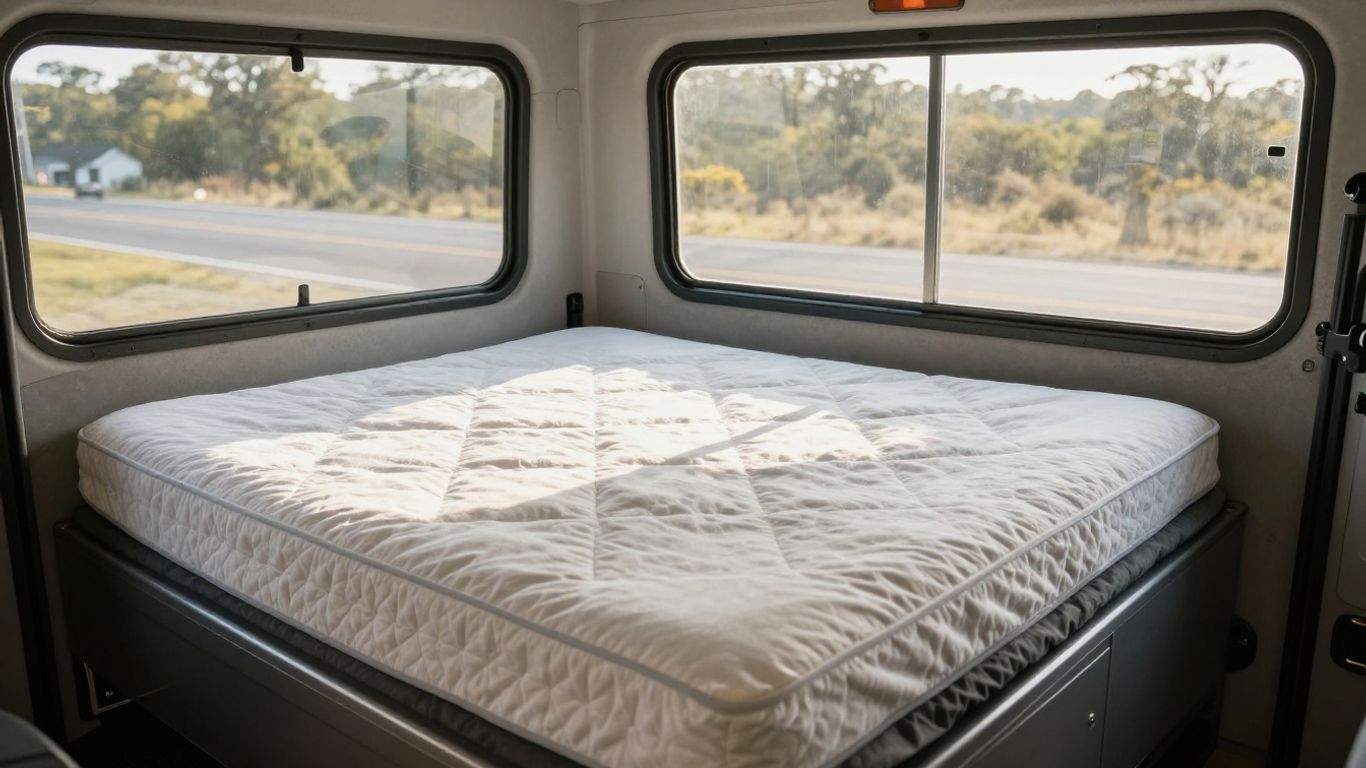
So, you’re on the hunt for a new mattress for your truck’s sleeper cab. It’s easy to get excited about all the options out there, but hold on a second. Before you click ‘buy,’ let’s talk about some common mistakes people make. Getting this wrong can lead to a mattress that just doesn’t fit, or worse, one that makes your already cramped space feel even smaller. The biggest mistake? Assuming you know the size without actually measuring.
The Danger of Guessing Measurements
It sounds obvious, right? Measure your space. But you’d be surprised how many folks just eyeball it or rely on what they think the dimensions are. Truck cabs aren’t like standard bedrooms; they have unique shapes and angles. A mattress that’s even an inch too wide or too long can be a real problem, making it hard to get in and out of bed, or even preventing the mattress from lying flat. Always get out your tape measure and get the exact numbers. It’s worth taking the time to accurately measure your sleeper cab to avoid disappointment.
Overlooking Thickness Limitations
We often focus on length and width, but mattress thickness is just as important, especially in a truck. Too thick a mattress can mean you’re constantly bumping your head on the ceiling when you sit up. This is particularly true if your cab has a lower roofline. You want enough padding for comfort, but not so much that it makes the space feel claustrophobic. Consider how much headroom you have when sitting up in bed. A mattress that’s too thick can really limit your movement.
Relying Solely on Brand Size Charts
While brand size charts can be a starting point, they aren’t always the final word. Different manufacturers might have slightly different ideas of what constitutes a standard size, or their charts might not account for the specific contours of your truck model. It’s always best to cross-reference the manufacturer’s dimensions with your own measurements. Remember, just like with patio furniture cushions, the exact fit matters.
Here’s a quick rundown of what to check:
- Width: Measure the narrowest and widest points of the space.
- Length: Measure from the furthest points where the mattress will sit.
- Thickness: Consider your headroom when sitting up.
Don’t let a poorly fitting mattress ruin your rest on the road. Taking a few extra minutes to measure carefully and consider all dimensions will save you a lot of hassle down the line. It’s about making your truck a comfortable home away from home, and that starts with a properly sized bed.
Conclusion
Finding the right mattress for your truck cab might seem like a small detail, but it makes a big difference in your daily comfort and rest. By taking the time to measure carefully and consider your needs, you can avoid common mistakes and get a mattress that truly fits. A good night’s sleep on the road isn’t just a luxury; it’s key to staying safe and focused. So, grab your tape measure, follow these tips, and get ready for some much-needed rest in your home away from home.
Frequently Asked Questions
What’s the most common size for a semi-truck mattress?
The most common size you’ll find for semi-trucks is about 42 inches wide and 80 inches long. But hey, trucks aren’t all the same, so it’s super important to measure your own sleeping space just to be sure. You don’t want to end up with a mattress that’s too big or too small, right?
Can I use a regular mattress in my truck?
Probably not. Truck mattresses are usually made to fit specific, often smaller, sleeper cabs. They also tend to be thinner than home mattresses to give you more headroom. Regular mattresses are generally too big and too thick. Plus, truck mattresses are built to be tougher for life on the road.
How do I measure my sleeper cab for a mattress?
It’s pretty simple, really. Just use a tape measure to find the length from the head to the foot of your sleeping area, and then measure the width at the widest spot. Don’t forget to check the height, too, so you know how thick of a mattress will fit without hitting your head. Write down all these numbers!
What if my measurements don’t match standard sizes?
If your measurements are a bit unusual, don’t sweat it. Many companies make custom-sized truck mattresses. You just give them your exact measurements, and they’ll make one that fits perfectly. It might cost a little more, but it’s way better than a mattress that doesn’t fit right.
What does ‘truck mattress’ even mean?
A truck mattress is basically a bed made for sleeping in a truck, usually in the sleeper part of a big rig or sometimes in a truck camper. They’re designed to be more compact and durable than regular home beds, fitting into tighter spaces while still trying to give you a good night’s sleep.
Why is mattress thickness important in a truck?
Thickness matters a lot in a truck cab because space is limited. A mattress that’s too thick can make it hard to sit up without bumping your head on the ceiling. You need enough room to move around comfortably. So, measure how much space you have for height before you pick a mattress.